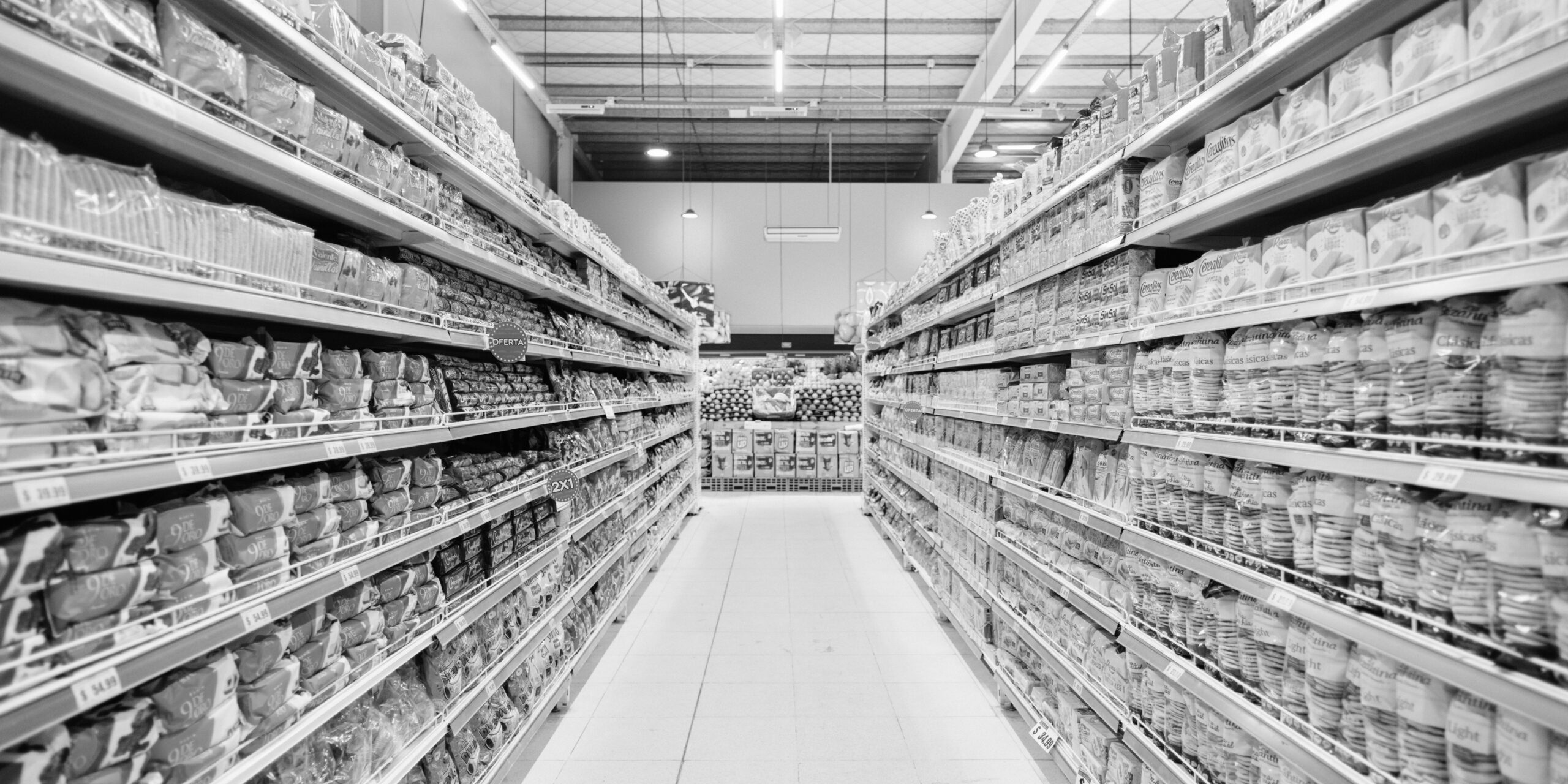
The mutation of retail trade in Africa
Carrefour withdrew its stake in its West African joint venture Adialéa, while CFAO Consumer sold its Senegalese network to EDK. At the same time, the group initiated new franchise agreements in Ethiopia, Ghana, Guinea, and Nigeria. These two moves are not contradictory. Together, they reveal the structural conditions that determine where modern commerce can, or cannot, take root in Africa, and what it takes for a market to reach the formalization stage.
Selective progress, not a general retreat
The narrative of Carrefour's "withdrawal" from Africa only tells part of the story. In July 2025, the group sold its remaining 2,95% stake in Adialéa, the joint venture created in 2013 to develop the brand in West and Central Africa, to CFAO. CFAO Consumer's Senegalese network—eight stores, including five Supeco and three Carrefour Market—was sold separately to the local group EDK. Taken individually, these moves appear to be a reduction in exposure. But at the same time, Carrefour accelerated its franchise development in other African markets.
In late 2025 and 2026, the company announced new operations in Ethiopia with Midroc and Queens Supermarket, in Ghana with Brands For All, in Guinea with Imperial Corporation Guinea, and in Nigeria with HyperCity. In Gabon, Prix Import continued expanding its network under the Carrefour banner, while in the DRC, the partnership with Hyper Psaro resulted in its first store opening in Kinshasa. In Nigeria, the franchise agreement was signed in April 2026, with operations scheduled to begin in September 2026. The move, therefore, represents less of a withdrawal from Africa than a shift in business model.
Several explanations could coexist. Adialéa's profitability may have influenced the decision to divest its stake. Carrefour's global strategy also prioritizes its core markets and may encourage a stricter allocation of capital. Auchan's expansion is also part of the competitive landscape, particularly in Senegal. However, none of these explanations alone is sufficient to account for why Carrefour is reducing its equity exposure while simultaneously increasing the number of markets it operates under license.
The most coherent interpretation is that of a two-pronged adjustment. On the one hand, Carrefour is limiting direct financial risk in environments where margins, imports, currency fluctuations, commercial real estate, and regulations can make operations challenging. On the other hand, the company is preserving the value of its brand, its methods, and its supply network by relying on local partners who bear the bulk of the operational risk. This interpretation remains analytical: Carrefour has not published a detailed explanation explicitly linking all these decisions.
The contrast with Shoprite reinforces this interpretation. The South African group has also reduced its direct presence in several markets outside its historical core, notably in Nigeria, Kenya, Uganda, the DRC, Madagascar, and Ghana. Carrefour is choosing to expand in some markets vacated by Shoprite, but by relying on local franchisees rather than replicating a highly capital-intensive expansion. Ghana provides a clear example: Carrefour announced a franchise partnership with Brands For All following the acquisition of seven Shoprite hypermarkets by FAD Ghana. The project thus leverages an existing network, limiting the need to create new retail locations.
This trajectory highlights the need to distinguish between brand footprint and actual economic exposure. Two retailers can have a comparable number of stores while exhibiting very different risk profiles. In Carrefour's case, the growth of its African network therefore does not necessarily translate into a corresponding increase in the group's capital investment. Franchising transforms the relevant metric: the number of stores must be considered in conjunction with the quality of the partner, the level of local investment, and the depth of the retail ecosystem.
The threshold for formalization: what modern commerce actually requires
Modern grocery retailing remains a minority sector in much of sub-Saharan Africa. A 2020 Euromonitor benchmark estimated "modern grocery retailing" at around 4% of the region's total retail value. This figure should be interpreted as a historical estimate, not a 2026 target. It does, however, serve as a reminder that the growth of a middle class and urbanization alone are not enough to guarantee the economic viability of a supermarket.
Infrastructure is the first filter. A modern retailer must ensure the security of its electricity supply, cold chain, urban logistics, customs clearance, retail space, and consistent product availability. These constraints directly impact profit margins. In a model where fresh, refrigerated, and imported products play a significant role, even the slightest energy or logistical vulnerability can transform revenue growth into value loss.
Regulations constitute the second filter. Ethiopia best illustrates this point. The consumer base had long existed in Addis Ababa, but access to the retail sector for foreign operators was limited. Directive 1001/2024 began opening these activities to foreign investors under certain conditions, and then Directive 1082/2025 replaced this framework by easing access requirements, notably with a paid-up capital threshold of $2,5 million for retail businesses. The franchise agreement between Carrefour and Queens Supermarket, a subsidiary of Midroc, was announced in January 2026, following these reforms. Here, the market was not created by Carrefour: the regulatory change made an already existing market addressable.
The consumption structure constitutes the third filter. Small, independent shops remain central to the daily shopping habits of many African households. They offer proximity, small sales units, flexibility, informal credit, and immediate adaptation to fluctuations in purchasing power. Modern commerce, therefore, does not automatically replace them. It primarily serves a narrower segment: urban households with salaried earners, able to buy in bulk, sensitive to traceability, quality, and price stability, and with physical access to a shopping center or supermarket.
Format then becomes a decisive variable. The hypermarket model assumes a large catchment area, a customer base with cars or high mobility, relatively large purchases, and commercial infrastructure capable of supporting significant floor space. Smaller, convenience, or discount formats can limit fixed costs per store, bring the brand closer to residential neighborhoods, and adapt the product range to local purchasing power. Their profitability, however, depends on the volumes and costs specific to each location. CFAO's shift to smaller formats in Francophone West Africa reflects this search for a better balance between customer density, average basket size, and real estate costs.
The threshold for formalization is therefore not a single income level applicable across the continent. It depends on a local combination of variables. A city may have a large population but remain unattractive if the electricity supply is unreliable, commercial rents are high, and most purchases are made daily rather than weekly. Conversely, a smaller market can be profitable if the infrastructure is reliable, regulations predictable, and the customer base concentrated. This logic suggests evaluating operational conditions alongside population size when analyzing Carrefour's entry decisions.
| ESG/SRI | Elements to examine |
|---|---|
| Infrastructure | Electricity, cold chain, logistics and access to commercial spaces. |
| Regulation | Investment conditions, imports, exchange rates and predictability of rules. |
| Consumers | Purchasing power, proximity, frequency of purchases and quality expectations. |
At the end of 2018, Jean-Christophe Brindeau explained that the growth of the customer base targeted by hypermarkets and supermarkets was not sufficient and justified the development of a new format.
Franchising as an architecture of risk
Franchising is sometimes presented as a second-tier solution, used when an international group is unwilling or unable to invest directly. Carrefour's African trajectory suggests a different interpretation. In markets where operations depend on in-depth knowledge of suppliers, authorities, logistics networks, purchasing habits, and exchange rate risk, franchising can be the most rational model.
Adialéa's trajectory is instructive. In 2013, Carrefour held 45% of the capital and had ambitions covering eight countries. Twelve years later, the network had concentrated on a few markets, and Carrefour no longer held a stake. This reduction in capital does not, however, mean the brand's disappearance. CFAO continues to operate Carrefour stores in Ivory Coast and Cameroon, while other partners are developing the brand in markets where Carrefour does not invest directly.
The division of roles becomes clearer. Carrefour brings a global brand, operational standards, access to certain supply networks, and a distribution methodology. The local partner brings working capital, real estate, teams, regulatory expertise, supplier relationships, and the ability to operate in sometimes highly volatile environments. The economic advantage for Carrefour is clear: the company can expand its geographic footprint without bearing the full operational losses, foreign exchange risk, or real estate liabilities.
- Capital tied up in the store network
- Proportional share of operational losses
- Greater exposure to exchange rates and leases
- Slower deployment in several regulatory regimes
- Potentially high exit cost
- Capital exposure significantly reduced
- The operating risk is borne primarily by the partner.
- Choosing the format best suited to the local market
- Locally managed regulatory relations
- Carrefour primarily retains the brand and contractual risk.
The model does not eliminate all risks. Poor local execution can damage the brand's image, reduce licensing revenues, and create contractual tensions. However, it does create a significant asymmetry: the direct costs of underperformance are borne more heavily by the partner than by Carrefour. This asymmetry explains why the retailer can attempt to enter Nigeria, Guinea, or Ethiopia without replicating the level of capital commitment of the Adialéa model.
Choosing a partner thus becomes the functional equivalent of an investment decision. Majid Al Futtaim in East Africa, CFAO in Francophone Africa, Midroc in Ethiopia, or Brands For All in Ghana bring more than just capital. They bring local execution capabilities, teams, access to real estate, supplier relationships, and an understanding of regulations. The more complex the market, the more this operational depth matters to the franchise's viability.
Franchising, however, imposes another discipline: quality control. Carrefour must maintain common standards while allowing its partners sufficient autonomy to adapt formats, prices, and product ranges. Excessive standardization can replicate the flaws of a poorly adapted global model; excessive autonomy can dilute the brand's value proposition. The challenge, therefore, is not to choose between central control and local adaptation, but to strike a balance that protects the brand without negating the franchisee's advantage.
| Market | Carrefour Status | Partner | Main signal |
|---|---|---|---|
| Ivory Coast | Active | CFAO | Established market, but stronger competition from Auchan |
| Senegal | Sold to EDK | EDK | Eight CFAO Consumer stores to be sold to EDK in 2025 |
| Ethiopia | Conversion announced | Midroc / Queens | 13 existing stores announced for conversion to the Carrefour banner |
| Ghana | Deployment announced | Brands For All | The transformation of 7 former Shoprite hypermarkets has been announced. |
| Guinea | Open | Imperial Corporation Guinea | First store to open in Conakry in April 2026 |
| Nigeria | Deployment announced | HyperCity | Agreement signed in April 2026; start announced for September 2026 |
Competition and formats: markets do not all reward the same model
The shift to franchising does not resolve the fundamental issue of format. In Africa, competition is no longer solely between international brands. Local and regional chains can leverage their knowledge of suppliers, purchasing habits, and retail locations. However, these advantages must be assessed on a case-by-case basis: they do not, in themselves, demonstrate a lower cost structure than that of international brands.
Auchan has a large network in French-speaking West Africa. The retailer entered Senegal in 2014 and Ivory Coast in 2022. As of September 17, 2025, its Senegalese network comprised 47 stores, including 42 food outlets and five textile stores, according to Ouestaf. In Ivory Coast, the retailer had approximately 15 stores in 2025. The density of this network makes Auchan a significant competitor. It is a factor in the market context, but it does not demonstrate that competition from Auchan determined the sale of CFAO Consumer's stores to EDK.
In East Africa, the Kenyan case shows the importance of local channels. Naivas maintains broader national coverage, while Carrefour, operated by Majid Al Futtaim, accelerated its expansion in 2025 with eight new openings, bringing its network to 34 stores. A Food Business MEA article published in September 2026 reported nine more openings planned before the end of the year. Carrefour's expansion reflects competition with Naivas and Quickmart; however, the number of stores alone is insufficient to compare the costs or profitability of the networks.
Nigeria faces several operational constraints. Shoprite relinquished direct ownership of its operations there in 2021. Traditional retail remains dominant: the BCG study published in 2022 estimated that over 600,000 small retailers accounted for 97% of national sales. This figure is a structural benchmark from the study, not a measure updated to 2026. The volatility of the naira, dependence on imports, logistical costs, and the depth of informal networks make it difficult to build a national supermarket chain with stable margins. Carrefour's decision to enter the market through HyperCity precisely reduces this exposure.
Ghana illustrates a different scenario. Carrefour is not building a network from scratch there: Franchise and Distribution (FAD) Ghana acquired seven Shoprite hypermarkets in November 2025, prior to the December announcement of the franchise agreement between Carrefour and Brands For All. The retailer is therefore entering a market where modern retail stores, teams, and a customer base already exist. This situation limits the need to build new sites and provides an operational foundation for the rebranding. It also demonstrates that the withdrawal of an international player does not necessarily signify the failure of modern retail itself: it can create opportunities for another operator with a different cost structure.
In Senegal, the sale of CFAO Consumer's stores to EDK also highlights the role of national operators in the sector's restructuring. This sale takes place in a market where Auchan has a dense network. These factors suggest an examination of proximity, pricing, and store format choices, without allowing us to attribute the sale to a single competitive cause.
- Population size does not guarantee the viability of a modern format.
- An existing network or already constructed assets can significantly reduce the cost of entry, as in Ghana.
- Local chains can maintain a sustainable advantage thanks to their density and knowledge of suppliers.
- The format matters as much as the brand: hypermarkets, supermarkets and discount stores do not respond to the same market economies.
- The franchise reduces Carrefour's financial risk, but does not eliminate the local partner's commercial risk.
The resilience of traditional commerce sets the limits of the model
Traditional commerce remains a major player despite the expansion of modern retail chains. It is not necessarily synonymous with informal commerce: small retailers can be registered and operate within a formal framework. In many African markets, small retailers meet needs that modern commerce cannot replicate at comparable costs: immediate proximity, informal credit, very small-quantity purchases, flexible hours, and rapid adaptation to product availability.
This resilience explains why the growth of modern retail will likely remain segmented. Supermarkets can gain market share in major metropolitan areas, among working households, and in certain categories where quality, traceability, and shopping convenience are valued. But they don't automatically replace existing networks; they operate alongside them. The question for Carrefour, therefore, is not how to "formalize" an entire market, but rather how to identify the consumer pockets where a modern format can achieve sufficient density.
Kenya, North Africa, and some major urban centers in West Africa demonstrate that this density is possible. Nigeria illustrates that a vast population can coexist with the enduring dominance of traditional commerce. Ethiopia shows that a market can suddenly become accessible when the legal framework evolves. Senegal exemplifies a restructuring of network ownership in a context of intense competition between international brands and national operators.
This coexistence between modern commerce and traditional networks should remain sustainable. Small retailers can operate with smaller spaces and more limited investments. Their storage, cold chain, and working capital needs vary depending on the products sold, but the flexibility of the quantities offered is an advantage for everyday purchases. They can also offer informal credit or accept installment purchases that better suit the daily incomes of many households. As long as these characteristics remain important, modern commerce will have to work with this ecosystem rather than try to replace it.
For Carrefour, this implies likely discontinuous growth. Openings should be concentrated in capital cities, major urban corridors, and areas with a high concentration of salaried incomes. Expansion into secondary cities will depend more on infrastructure development, retail real estate, and lower-cost formats. In other words, the future network map will be determined less by the total population of countries than by the actual geography of purchasing power and logistics.
| ESG/SRI | Elements to examine |
|---|---|
| North Africa | Modern networks established in several countries; traditional trade still dominant in Morocco and Egypt in the 2022 BCG study. |
| Kenya | Established modern chains and competition between Naivas, Quickmart and Carrefour; strong presence of small businesses. |
| Ivory Coast | Coexistence of local and international networks, with competition on formats and locations. |
| Ethiopia | Regulatory relaxation in 2024–2025 and announced conversion of the Queens network. |
| Nigeria | Traditional commerce dominates in the 2022 BCG study; constraints of exchange rate, logistics and electricity. |
This perspective also makes comparing the number of stores more complex. A network of dozens of outlets in a highly formalized market can generate different economics than a much smaller network operating in a largely informal environment. Carrefour's success will therefore need to be assessed on a country-by-country basis: partner profitability, speed of expansion, ability to localize supplies, and capacity to adapt the format as consumption patterns change.
- Can CFAO sustainably develop Carrefour in Ivory Coast and Cameroon in the face of denser competition and without direct participation from Carrefour in the capital?
- Will the franchise model be sufficient to absorb Nigeria's volatility, or will the market remain too expensive for sustainable national expansion?
- Will Ethiopia become a replicable case of growth after regulatory liberalization, or will it remain an exception linked to the quality of its local partner?
- Can Carrefour's reduction of capital risk sustainably preserve the brand's operational quality as the network depends on an increasing number of independent franchisees?
- At what rate will convenience and discount formats gain ground against hypermarkets in major cities of French-speaking Africa?
Carrefour's African restructuring is neither a simple withdrawal nor an expansion. It primarily reflects a shift in its risk management approach. The group is reducing its direct equity exposure while simultaneously expanding its brand presence through local partners. This strategy aligns with the continent's significant variations in operator quality, infrastructure, regulations, and consumer patterns across different markets.
The concept of a "formalization threshold" helps to understand these differences. When infrastructure is sufficiently robust, the regulatory framework is clear, and an urban consumer base possesses the necessary purchasing power, modern commerce can grow. When one of these conditions is lacking, population size or brand recognition alone is insufficient. Nigeria is the most obvious example; Ethiopia illustrates the role of regulatory liberalization in granting access to a market previously severely restricted to foreign investors.
The most important strategic signal is therefore less Carrefour's presence than the form that this presence takes. In the new franchise agreements, the partners bear the investment and local operations, while Carrefour contributes its brand, products, and expertise. This structure allows for more gradual expansion, but it also makes Carrefour more dependent on the quality of its partners. The success of the model will be measured less by the number of new stores added to the network than by the ability of these franchisees to build profitable networks in markets where traditional retail still holds a significant position.
- Carrefour Group — entry into Ethiopia: 13 Queens stores to be converted and the 3,000 franchised store mark to be reached in October 2025. Source
- Ecofin Agency — Carrefour 2030 plan: objective of presence in 22 African countries and network estimated at nearly 700 stores in Africa by February 2026. Source
- Carrefour · Universal Registration Document 2025 — sale of the remaining 2,95% of Adialéa to CFAO in July 2025 for €6,5 million. Source
- UNCTAD Investment Policy Hub — Ethiopian directives 1001/2024 and 1082/2025 gradually opening trade to foreign investors. Source
- Reuters / Boursorama — Ghana: agreement with Brands For All, announced transformation of 7 Shoprite hypermarkets. Source
- APS — Senegal: CFAO Consumer will sell 8 stores to EDK in July 2025. Source
- AGP Guinea — opening of the first Carrefour Market in Conakry on April 15, 2026. Source
- BCLP / MarketScreener — Nigeria: franchise agreement with HyperCity in April 2026; conversion of existing network and operational start announced for September 2026. Accord · Calendar
- BCG — traditional trade in Africa: more than 70% of food, beverage and personal care purchases from small shops; Nigeria: 97% of national sales in the 2022 study. Source
- Euromonitor — 2020 benchmark: modern food trade represented approximately 4% of the value of retail in sub-Saharan Africa. Source
- Food Business MEA — Kenya: 34 stores by the end of 2025 after 8 openings, with 9 more openings announced for the end of 2026. Source
- Carrefour · Universal Registration Document 2023 — dilution of the stake in Adialéa from 5% at the end of 2022 to approximately 3% at the end of 2023. Source
- Geoffrey Fadoul — acquisition of the seven Shoprite hypermarkets by FAD Ghana in November 2025 and franchise partnership with Brands For All. Source
- Westaf — Auchan network in Senegal as of September 17, 2025: 47 points of sale, including 42 food and five textiles. Source
- Sagaci Research — reorientation of CAD/CAM towards hybrid formats and remarks by Jean-Christophe Brindeau, January 2019. Source
- UNCTAD — opening of trade to foreign investors under certain conditions from 2024. Source
- Linéaires — inauguration of the ninth Carrefour store in Gabon in Ntoum on June 30, 2025. Source
- Carrefour — establishment in the DRC with Hyper Psaro in 2025. Source
The analysis combines public communications from Carrefour and its partners with institutional sources and recognized business media. The Euromonitor (2020) and BCG (2022) benchmarks are explicitly dated: they describe market structures and should not be interpreted as 2026 measurements. Store numbers may vary depending on the format and the date of the count. In Nigeria, available sources confirm the franchise agreement was signed in April 2026 and a launch announced for September 2026; as of September 30, 2026, checks performed for this update did not identify sufficiently robust institutional confirmation to assert that the conversion was already complete. Carrefour has not published a single explanation linking its exits, divestitures, and new franchise entries: the article's conclusions therefore remain an analytical reading based on observable facts, and not an official position of the company.